
Description
We investigate the mechanisms of the perception of body movements, and their relationship with motor execution and social signals.
We investigate the mechanisms of the perception of body movements, and their relationship with motor execution and social signals. Our work combines psychophysical experiments and the development of physiologically-inspired neural models in close collaboration with electrophysiologists inside and outside of Tübingen. In addition, exploiting advanced methods from computer animation and Virtual Reality (VR), we investigate the perception of body movements (facial and body expressions) in social communication, and its deficits in psychiatric disorders, such as schizophrenia or autism spectrum disorders. A particular new focus is the study of intentional signals that are conveyed by bodily and facial expressions. For this purpose, we developed highly controlled stimulus sets, exploiting high-end methods from computer graphics. In addition, we develop physiologically-inspired neural models for neural circuits involved in the processing of bodies, actions, and the extraction of intent and social information from visual stimuli.
Researchers
Current Projects
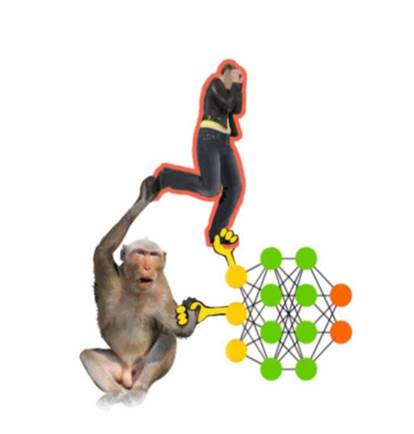
RELEVANCE: How body relevance drives brain organization
Social species, and especially primates, rely heavily on conspecifics for survival. Considerable time is spent watching each other’s behavior for preparing adaptive social responses. The project RELEVANCE aims to understand how the brain evolved special structures to process highly relevant social stimuli, such as bodies and to reveal how social vision sustains adaptive behavior.
Read more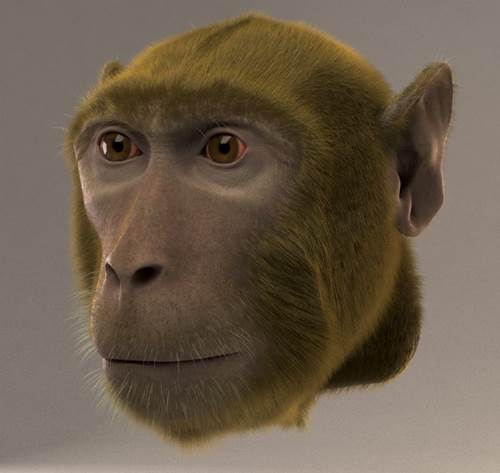
Modelling and Investigation of Facial Expression Perception
Dynamic faces are essential for the communication of humans and non-human primates. However, the exact neural circuits of their processing remain unclear. Based on previous models for cortical neural processes involved for social recognition (of static faces and dynamic bodies), we propose a norm-based mechanism, relying on neurons that represent dierences between the actual facial shape and the neutral facial pose.
Read more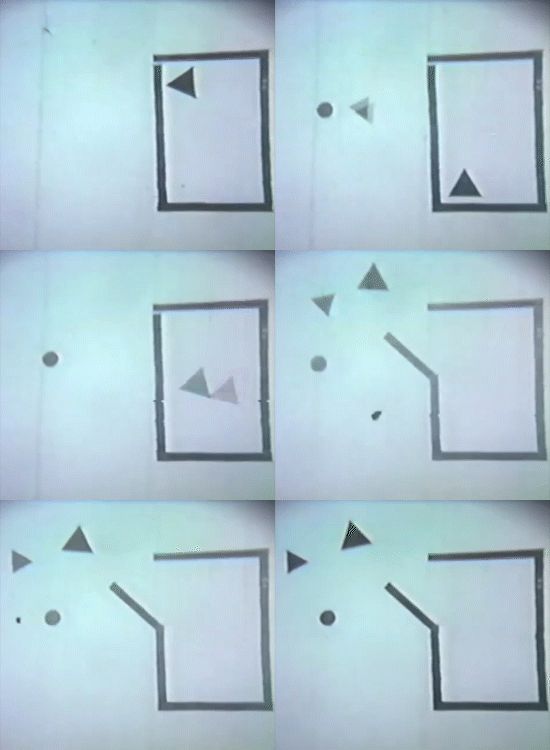
Neural mechanisms underlying the visual analysis of intent
Primates are very efficient in the recognition of intentions from various types of stimuli, involving faces and bodies, but also abstract moving stimuli, such as moving geometrical figures as illustrated in the seminal experiments by Heider and Simmel (1944). How such stimuli are exactly processed and what the underlying neural and computational mechanisms are remains largely unknown.
Read more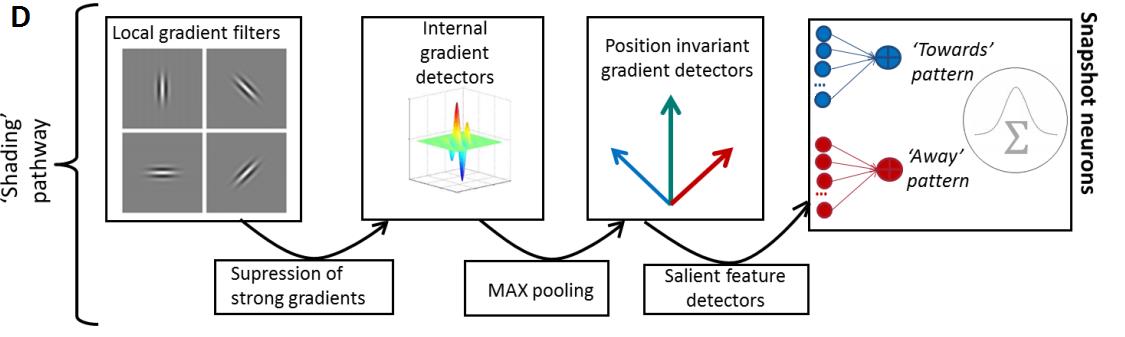
Neural model for shading pathway in biological motion stimuli
Biological motion perception is influenced by shading cues. We study the influence of such cues and develop neural models how the shading cues are integrated with other features in action perception.
Read moreFinished Projects
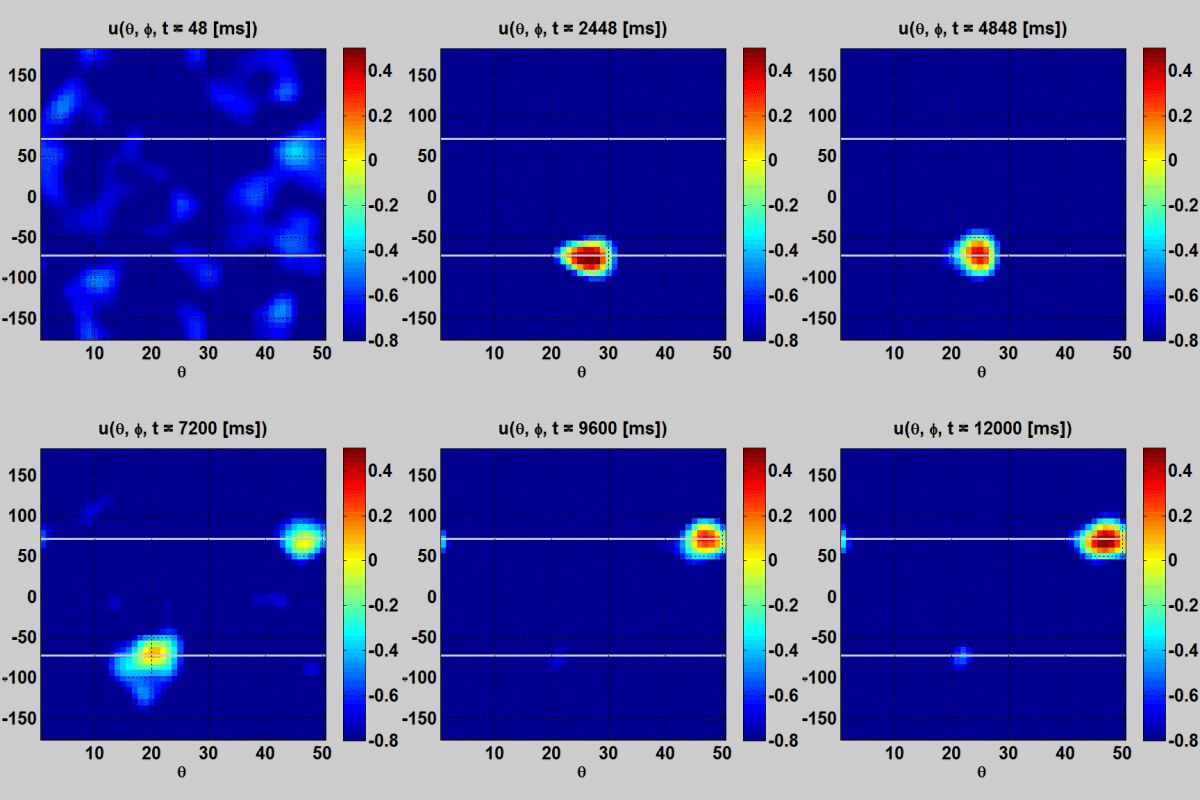
Neural field model for multi-stability in action perception
The perception of body movements integrates information over time. The underlying neural system is nonlinear and is charactrized by a dynamics that supports multi-stable perception. We have investigated multisstable body motion perception and have developed physiologically-inspired neural models that account for the observed psychophysical results.
Read more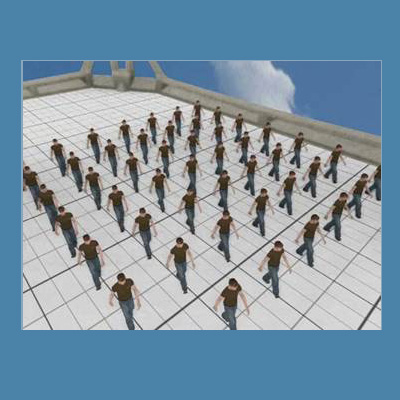
Dynamical Stability and Synchronization in Character Animation
An important domain of the application of dynamical systems in computer animation is the simulation of autonomous and collective behavior of many characters, e.g. in crowd animation.
Read more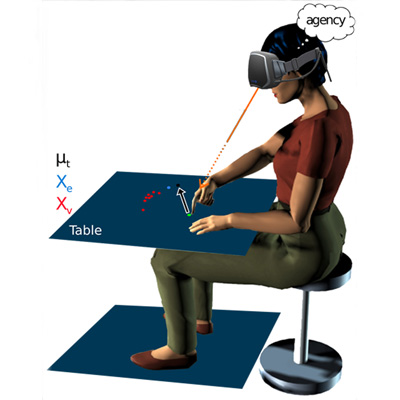
Neural representations of sensory predictions for perception and action
Attribution of percepts to consequences of own actions depends on the consistency between internally predicted and actual visual signals. However, is the attribution of agency rather a binary decision ('I did, or did not cause the visual consequences of the action'), or is this process based on a more gradual attribution of the degree of agency? Both alternatives result in different behaviors of causal inference models, which we try to distinguish by model comparison.
Read more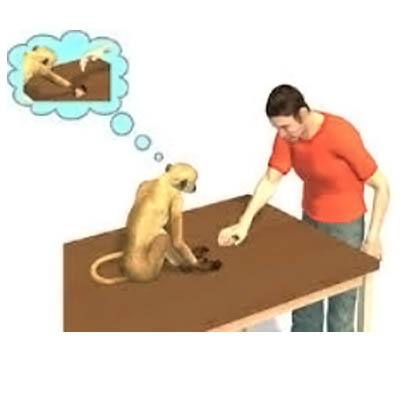
Neuralphysiologically-inspired models of visual action perception and the perception of causality
The recognition of goal-directed actions is a challenging problem in vision research and requires the recognition not only of the movement of amd effector(e.g. the hand) but also the processing its relationship to goal objects, such as a grasped piece of food. In close collaborations with electrophysiologists, we develop models for the neural circuits in cortex that underly this visual function. These models also account for several properties of 'mirror neurons', and for the processing of stimuli (like the one shown in the icon) that suggest causal interactions between objects. In addition, we studied psychophysically the interaction between action observation and exertion using VR methods.
Read more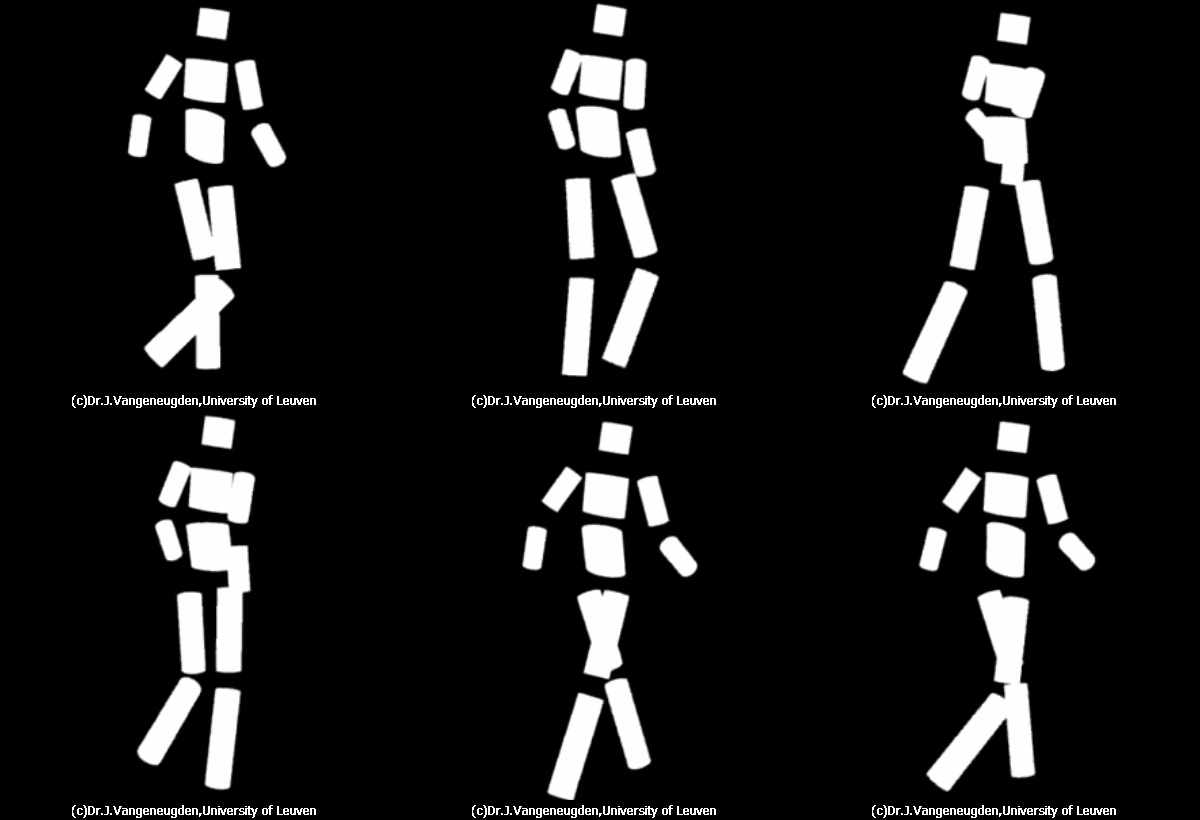
Neurodynamic model for multi-stability in action perception
Action perception is related to interesting dynamical phenomena, such as multi-stability and adaptation. The stimulus shown in this demo is bistable and can be seen as walking obliquely coming out or going into the image plane. Such multistability and associated spontaneous perceptual switches result form the dynamics of the neural representation of perceived actions. We investigate this dynamics pasychophysically and model it using neural network models.
Read more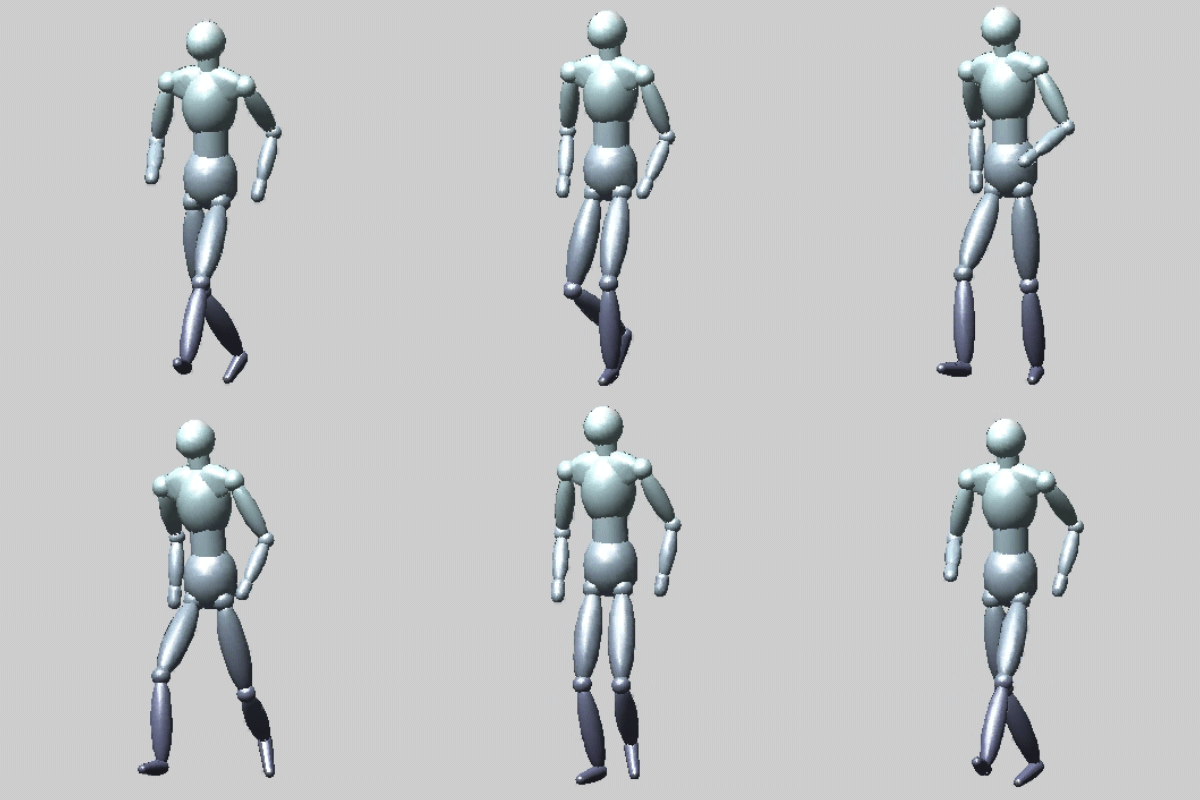
Processing of emotional body expressions in health and disease
Body movements are an important source of information about the emotion of others. The perception of emotional body expressions is impaired in different psychiatric diseases. We have developed methods to generate emotional body motion srimuli with highly-controlled properties, and we exploitz them to study emotion perception in neurologiocal and psychiatric patients.
Read more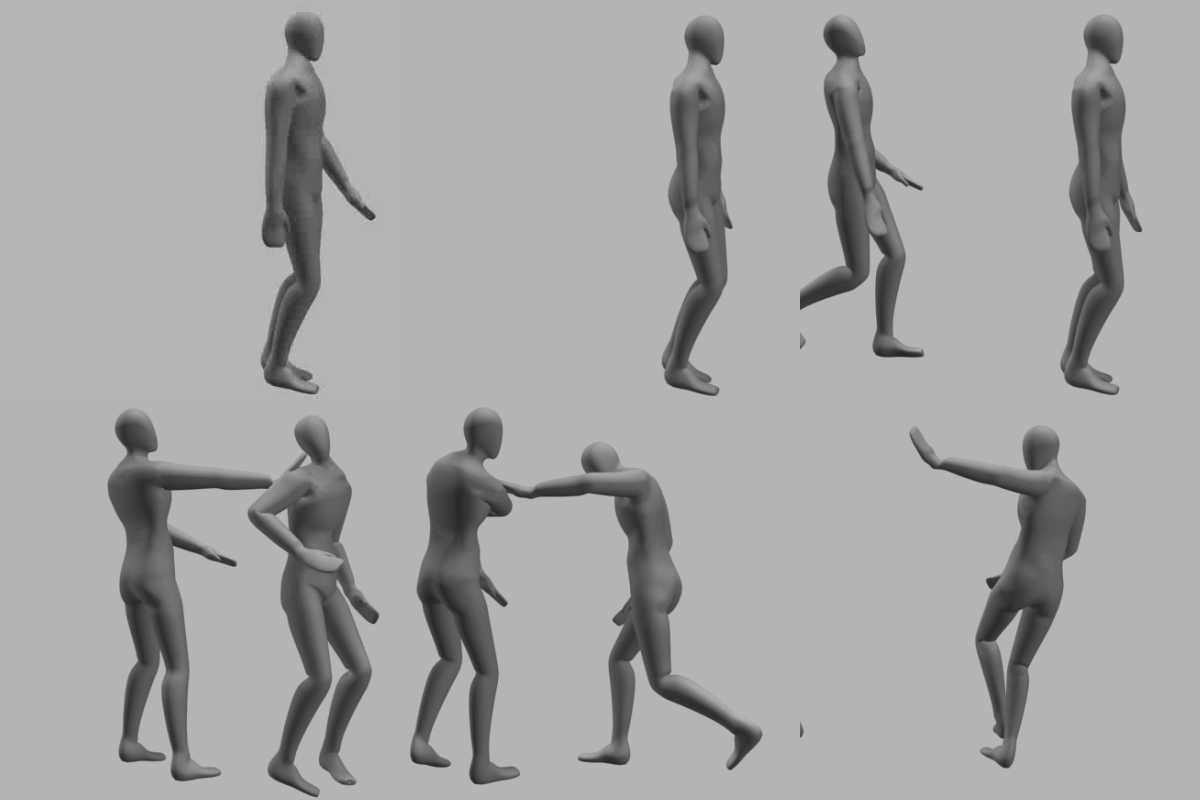
Production and perception of interactive emotional body expressions
A substantial amount of research has addressed the expression and perception of emotions with human faces. Body movements likely also contribute to our expression of emotions. However, this topic has received much less research interest so far. We use techniques from machine learning to synthesize highly-controlled emotional body movements and use them to study the perception and the neural mechanisms of the perception of emotion from bodily emotion expression.
Read more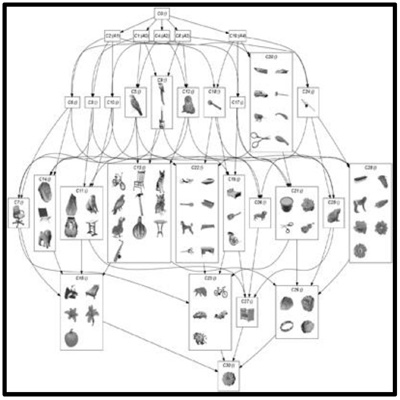
Understanding the semantic structure of the neural code with Formal Concept Analysis
Mammalian brains consist of billions of neurons, each capable of independent electrical activity. From an information-theoretic perspective, the patterns of activation of these neurons can be understood as the codewords comprising the neural code. The neural code describes which pattern of activity corresponds to what information item. We are interested in the structure of the neural code.
Read morePublications
Kumar, P. & Giese, M. A. (2026). Appearance-free Action Recognition: Zero-shot Generalization in Humans and a Two-Pathway Model. arXiv, 16675.
More
Appearance-free Action Recognition: Zero-shot Generalization in Humans and a Two-Pathway Model
Abstract:
Action recognition is a fundamental ability for social species. Yet, its underlying computations are not well understood. Classical psychophysical studies using simplified stimuli have shown that humans can perceive body motion even under degradation of relevant shape cues. Recent work using real-world action videos and their appearance-free counterparts (that preserve motion but lack static shape cues) included explicit training of humans and models on the appearance-free videos. Whether humans and vision models generalize in a zero-shot manner to appearance-free transformations of real-world action videos is not yet known. To measure this generalization in humans, we conducted a laboratory-based psychophysics experiment. 22 participants were trained to recognize five action categories using naturalistic videos (UCF5 dataset), and tested zero-shot on two types of appearance-free transformations: (i) dense-noise motion videos from an existing dataset (AFD5) and (ii) random-dot appearance-free videos. We find that participants recognize actions in both types of appearance-free videos well above chance, albeit with reduced accuracy compared to naturalistic videos. To model this behavior, we developed a two-pathway 3D CNN-based model combining an RGB (form) stream and an optical flow (motion) stream, including a coherence-gating mechanism inspired by Gestalt common-fate grouping. Our model generalizes to both appearance-free datasets and outperforms contemporary video classification models, narrowing the gap to human performance. We find that the motion pathway is critical for generalization to appearance …
Authors:
Kumar, Prerana Giese, Martin A.
Type of Publication:
Article
Journal:
arXiv
Pages:
16675
Year:
2026
Month:
April 17, 2026
Full text: Online version
Lappe, A. & Giese, M. (2026). Register and [CLS] tokens induce a decoupling of local and global features in large ViTs. Advances in Neural Information Processing Systems, 38, 1009-1029.
More
Register and [CLS] tokens induce a decoupling of local and global features in large ViTs
Abstract:
Recent work has shown that the attention maps of the widely popular DINOv2 model exhibit artifacts, which hurt both model interpretability and performance on dense image tasks. These artifacts emerge due to the model repurposing patch tokens with redundant local information for the storage of global image information. To address this problem, additional register tokens have been incorporated in which the model can store such information instead. We carefully examine the influence of these register tokens on the relationship between global and local image features, showing that while register tokens yield cleaner attention maps, these maps do not accurately reflect the integration of local image information in large models. Instead, global information is dominated by information extracted from register tokens, leading to a disconnect between local and global features. Inspired by these findings, we show that the [CLS] token itself leads to a very similar phenomenon in models without explicit register tokens. Our work shows that care must be taken when interpreting attention maps of large ViTs. Further, by clearly attributing the faulty behavior to register and [CLS] tokens, we show a path towards more interpretable vision models.
Authors:
Lappe, Alexander Giese, Martin
Type of Publication:
Article
Full text: Online version
Martini, L. M., Bognár, A., Vogels, R. & Giese, M. A. (2026). Realistic monkey body animation reveals an uncanny valley in macaque body perception. PLoS Biol, 24(7).
More
Realistic monkey body animation reveals an uncanny valley in macaque body perception
Abstract:
Social interactions are essential for survival in primates, relying on both facial expressions and body signals. The accurate characterization of these signals is critical for understanding the neurocomputational mechanisms underlying social communication. While previous work has focused on recognizing monkey behavior, a causal and direct manipulation of individual cues strongly benefits from believable, dynamic body avatars—analogous to those successfully developed for faces. Creating lifelike monkey avatars with realistic body motion, however, is challenging. Acquiring sufficiently accurate movement data for animation with marker-based motion capture is impractical, and markerless tracking methods require extensive manual labeling. To address this, we developed MacAction, a realistic macaque body avatar animated from multi-camera markerless tracking data. Our method reconstructs accurate trajectories for a large number of keypoints, as required for the 3D animation of realistic body models. The entire time course of individual actions is captured using only two labeled keyframes per second, with performance further validated on a large-scale human multi-view dataset. We assessed the animation quality of our dynamic avatar in a free-viewing experiment with eight macaque observers for single macaque actions, where fixation behavior was indistinguishable between our animations and matched real videos. Moreover, by systematically varying the realism of the avatar, we found an uncanny valley effect in macaque body perception, similar to that previously described in both humans and macaque faces. These findings support the commonalities of social vision across primate species, providing a foundation for controlled experiments aimed at clarifying the detailed neurocomputational mechanisms of social body perception in primates.
Authors:
Martini, Lucas M. Bognár, Anna Vogels, Rufin Giese, Martin A.
Type of Publication:
Article
Full text: PDF | Online version
Lappe, A. & Giese, M. A. (2025). Another BRIXEL in the Wall: Towards Cheaper Dense Features. arXiv.
More
Another BRIXEL in the Wall: Towards Cheaper Dense Features
Abstract:
Vision foundation models achieve strong performance on both global and locally dense downstream tasks. Pretrained on large images, the recent DINOv3 model family is able to produce very fine-grained dense feature maps, enabling state-of-the-art performance. However, computing these feature maps requires the input image to be available at very high resolution, as well as large amounts of compute due to the squared complexity of the transformer architecture. To address these issues, we propose BRIXEL, a simple knowl- edge distillation approach that has the student learn to re- produce its own feature maps at higher resolution. Despite its simplicity, BRIXEL outperforms the baseline DINOv3 models by large margins on downstream tasks when the res- olution is kept fixed. Moreover, it is able to produce feature maps that are very similar to those of the teacher at a frac- tion of the computational cost
Authors:
Lappe, Alexander; Giese, Martin A.
Type of Publication:
Article
Full text: Online version
Raman, R., Bognár, A., Nejad, G. G., Mukovskiy, A., Martini, L. M., Giese, M. A. et al. (2025). Keypoint-based modeling reveals fine-grained body pose tuning in superior temporal sulcus neurons. Nature Communications.
More
Keypoint-based modeling reveals fine-grained body pose tuning in superior temporal sulcus neurons
Abstract:
Understanding how the human brain processes body movements is essential for clarifying the mechanisms underlying social cognition and interaction. This study investigates the encoding of biomechanically possible and impossible body movements in occipitotemporal cortex using ultra-high field 7Tesla fMRI. By predicting the response of single voxels to impossible/possible movements using a computational modelling approach, our findings demonstrate that a combination of postural, biomechanical, and categorical features significantly predicts neural responses in the ventral visual cortex, particularly within the extrastriate body area (EBA), underscoring the brain{\textquoteright}s sensitivity to biomechanical plausibility. Lastly, these findings highlight the functional heterogeneity of EBA, with specific regions (middle/superior occipital gyri) focusing on detailed biomechanical features and anterior regions (lateral occipital sulcus and inferior temporal gyrus) integrating more abstract, categorical information.Competing Interest StatementThe authors have declared no competing interest.
Authors:
Raman, Rajani Bognár, Anna Nejad, Ghazaleh Ghamkhari Mukovskiy, Albert; Martini, Lucas M.; Giese, Martin A.; Vogels, Rufin
Type of Publication:
Article
Full text: Online version